
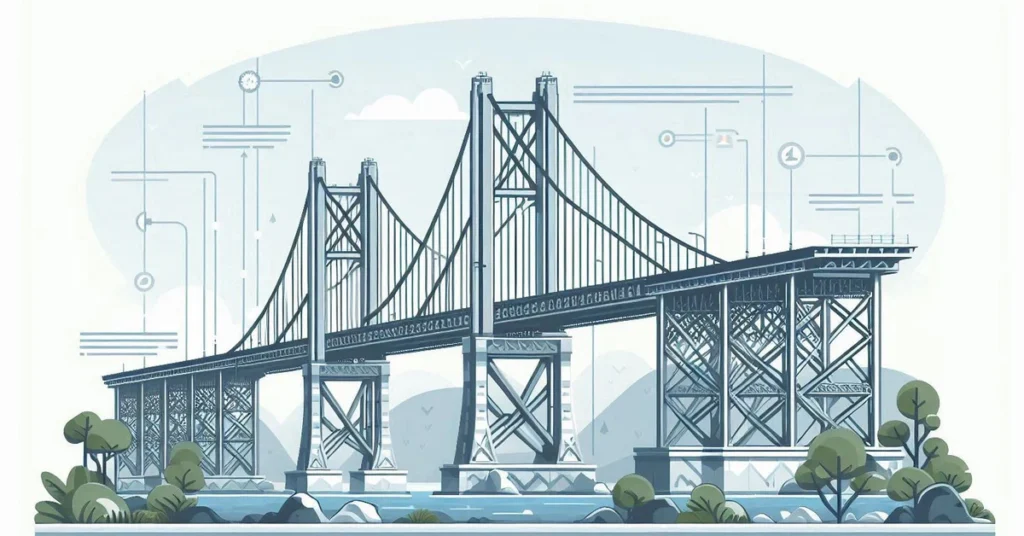
Bridges are more than just pathways connecting two points—they are lifelines for cities, economies, and communities. Yet, these massive structures face constant threats from nature. Earthquakes can shake the ground beneath them, while strong winds can push and twist their spans. Modern bridge design has evolved to meet these challenges, blending engineering brilliance with lessons learned from past failures.
In this article, we’ll explore how modern bridges are designed to withstand earthquakes and wind, the science behind their resilience, and why these innovations matter for safety and sustainability.
Why Bridges Need to Resist Natural Forces
Bridges are exposed to the elements 24/7. Unlike buildings, which are anchored to the ground, bridges often stretch across rivers, valleys, or oceans, making them more vulnerable.
- Earthquakes: Seismic waves can cause the ground to move violently, shaking bridge foundations and supports. Without proper design, bridges can crack, collapse, or become unusable.
- Wind: High winds, especially in open areas or coastal regions, can create oscillations. If not controlled, these movements can destabilize the structure.
History has shown us the consequences of ignoring these forces. The collapse of the Tacoma Narrows Bridge in 1940 due to wind-induced oscillations remains a classic example of why aerodynamic design is crucial. Similarly, earthquakes in Japan, Chile, and California have highlighted the need for seismic-resistant engineering.
Earthquake-Resistant Bridge Design

Modern bridge engineers use a combination of materials, design strategies, and technologies to ensure bridges survive seismic events.
1. Flexible Foundations
- Bridges are built with deep foundations that can move slightly without breaking.
- Pile foundations (long columns driven into the ground) help distribute seismic forces.
2. Seismic Isolation Bearings
- These are special devices placed between the bridge deck and its supports.
- They act like shock absorbers, allowing the bridge to move independently of the shaking ground.
- Example: The Golden Gate Bridge retrofit included seismic isolation bearings to improve earthquake resilience.
3. Energy Dissipation Systems
- Engineers use dampers (similar to car shock absorbers) to absorb seismic energy.
- This prevents the bridge from experiencing sudden jolts.
4. Redundancy in Design
- Modern bridges are built with multiple load paths.
- If one part fails, others can carry the load, preventing catastrophic collapse.
5. Use of Ductile Materials
- Steel and reinforced concrete are chosen for their ability to bend without breaking.
- Ductility ensures the bridge can deform under stress but still remain standing.
Wind-Resistant Bridge Design
Wind is a constant force, but extreme gusts or sustained high-speed winds can be dangerous. Engineers design bridges to “dance with the wind” rather than fight it.
1. Aerodynamic Decks
- Bridge decks are shaped to allow wind to flow smoothly around them.
- This reduces vortex shedding (a phenomenon that caused the Tacoma Narrows collapse).
2. Open Truss Structures
- Truss designs allow wind to pass through instead of pushing against a solid wall.
- This reduces pressure and oscillations.
3. Cable-Stayed and Suspension Systems
- Cables are designed to absorb and distribute wind forces.
- Modern suspension bridges use aerodynamic cables that resist vibration.
4. Wind Tuned Mass Dampers
- Large weights are installed inside the bridge to counteract wind-induced vibrations.
- Example: The Millennium Bridge in London used dampers after pedestrians experienced swaying due to wind and foot traffic resonance.
5. Wind Tunnel Testing
- Before construction, scale models are tested in wind tunnels.
- Engineers simulate different wind conditions to refine the design.
The Science Behind Resilience
Earthquake Forces
- Seismic waves create horizontal and vertical ground motion.
- Bridges must resist both shaking and twisting forces.
- Engineers use computer simulations to predict how a bridge will behave during different magnitudes of earthquakes.
Wind Forces
- Wind creates lift, drag, and oscillation.
- Bridges must balance these forces to avoid resonance (when vibrations amplify).
- Aerodynamic shaping and damping systems are key to stability.
Real-World Examples of Resilient Bridges

Akashi Kaikyō Bridge (Japan)
- Longest suspension bridge in the world.
- Designed to withstand earthquakes and typhoons.
- Uses massive steel cables and aerodynamic deck design.
Øresund Bridge (Denmark-Sweden)
- Combines a cable-stayed bridge and tunnel.
- Built to resist strong winds across the Baltic Sea.
San Francisco–Oakland Bay Bridge (USA)
- Retrofitted after the 1989 Loma Prieta earthquake.
- Includes seismic isolation bearings and flexible joints.
Unique Angles: Beyond Engineering

1. Sustainability and Climate Change
- Stronger winds and more frequent earthquakes due to climate shifts demand resilient designs.
- Engineers now consider long-term environmental changes in bridge planning.
2. Smart Technology Integration
- Sensors embedded in bridges monitor vibrations and stress in real time.
- Data helps engineers predict maintenance needs and detect early signs of damage.
3. Community Confidence
- Resilient bridges aren’t just about safety—they build public trust.
- People are more willing to use infrastructure when they know it can withstand disasters.
How Engineers Balance Cost and Safety

Designing earthquake- and wind-resistant bridges is expensive. However, the cost of failure is far greater. Engineers balance budgets by:
- Prioritizing high-risk areas for advanced designs.
- Using modular construction to reduce costs.
- Retrofitting older bridges instead of rebuilding them entirely.
Comparing Earthquake vs Wind Design Strategies
| Factor | Earthquake Design | Wind Design |
|---|---|---|
| Primary Goal | Absorb seismic energy | Reduce aerodynamic forces |
| Key Tools | Isolation bearings, dampers | Aerodynamic decks, mass dampers |
| Materials | Ductile steel, reinforced concrete | Lightweight, aerodynamic steel |
| Testing | Seismic simulations | Wind tunnel experiments |
Key Takeaways
- Modern bridges are designed to bend, flex, and absorb energy rather than resist it rigidly.
- Earthquake resilience relies on flexible foundations, isolation bearings, and ductile materials.
- Wind resilience depends on aerodynamic shaping, damping systems, and cable design.
- Real-world examples like the Akashi Kaikyō Bridge and Bay Bridge show these principles in action.
- Smart technology and sustainability are shaping the future of resilient bridge design.
Final Thoughts
Bridges symbolize connection, progress, and human ingenuity. But they also face relentless challenges from nature. Thanks to modern engineering, today’s bridges are not just stronger—they’re smarter. They flex with earthquakes, dance with the wind, and stand tall against forces that once toppled giants.
Explore MORE ARTICLES