Airplane turbulence is one of the most common experiences passengers face in the sky. The sudden bumps, shakes, or drops can feel unsettling—even frightening—if you don’t know what’s happening. Yet, despite the drama it sometimes creates, turbulence is rarely dangerous. In fact, pilots, engineers, and aviation experts consider it a routine part of flying.
This article will explain why turbulence happens, the science behind it, and why it’s usually safe, while also offering practical tips to ease your mind the next time your flight gets bumpy.
What Exactly Is Turbulence?
Turbulence is simply irregular movement of air that causes an aircraft to move unpredictably. Think of it as driving on a road with potholes—the car jolts, but it’s still under control.
Planes fly through the atmosphere, which is full of invisible currents, temperature differences, and wind patterns. When these forces interact, they create uneven airflows. The aircraft feels these changes as turbulence.
The Main Causes of Turbulence
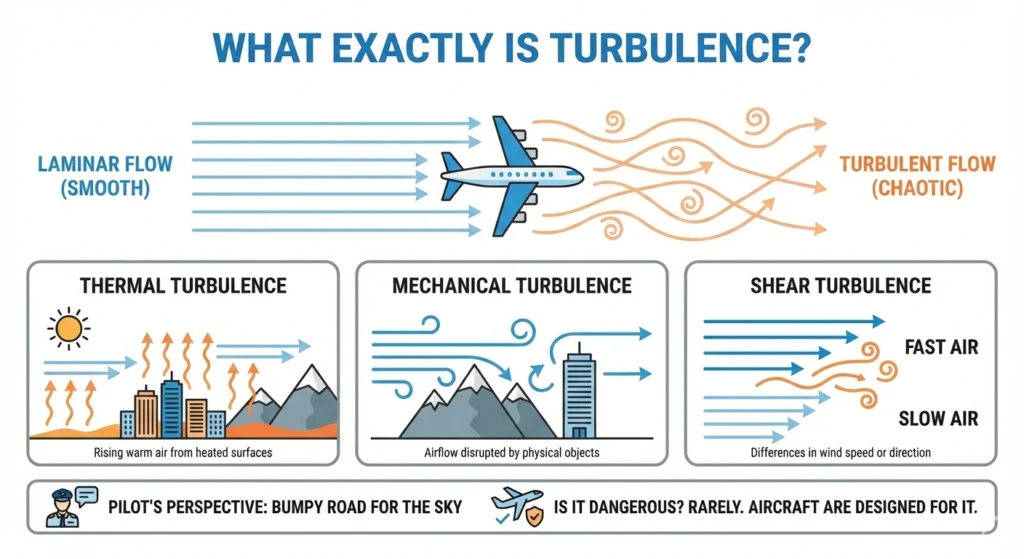
Turbulence doesn’t come from one single source. Several natural and atmospheric factors contribute:
1. Jet Streams
- Jet streams are fast-moving ribbons of air high in the atmosphere.
- When planes cross or fly near them, the sharp differences in wind speed can cause turbulence.
- Example: Flying from North America to Europe often involves crossing the Atlantic jet stream, where turbulence is common.
2. Mountains and Terrain
- Air flowing over mountains creates waves, much like water flowing over rocks in a river.
- These “mountain waves” can cause turbulence even hundreds of miles away.
- Example: Flights near the Rocky Mountains or the Himalayas often encounter this type.
3. Weather Systems
- Thunderstorms, cold fronts, and warm fronts all disturb air patterns.
- Even if a plane avoids the storm itself, the surrounding atmosphere can still be turbulent.
4. Clear Air Turbulence (CAT)
- This is the most unpredictable type because it occurs without visible clouds or storms.
- It often happens at cruising altitude, where planes fly at high speeds.
- Pilots rely on reports from other aircraft and weather radar to anticipate it.
5. Wake Turbulence
- Caused by other aircraft, especially large ones like jumbo jets.
- When a smaller plane flies behind a bigger one, it can feel the “wake” of disturbed air.
Why Turbulence Is Usually Safe
Even though turbulence feels dramatic, airplanes are designed to handle it. Here’s why you can relax:
1. Aircraft Engineering
- Modern planes are built to withstand far more stress than turbulence can cause.
- Wings flex and bend intentionally to absorb the forces of uneven air.
- Engineers test aircraft under extreme conditions—far beyond what they’ll ever face in real life.
2. Pilot Training
- Pilots are trained extensively to manage turbulence.
- They know how to adjust altitude, speed, and flight paths to minimize discomfort.
- Communication with air traffic control and other pilots helps them anticipate rough patches.
3. Safety Protocols
- Seatbelt signs aren’t just for show—they’re a precaution against sudden jolts.
- Cabin crew are trained to secure the cabin quickly when turbulence is expected.
4. Statistics Speak Volumes
- Turbulence-related accidents are extremely rare.
- Most turbulence injuries happen when passengers ignore seatbelt instructions.
- The odds of turbulence causing structural damage to a plane are virtually zero.
Turbulence Intensity Levels
Aviation experts classify turbulence into categories:
| Level | Description | Passenger Experience |
|---|---|---|
| Light | Slight bumps, minimal effect | Drinks may shake slightly |
| Moderate | Noticeable movement | Walking becomes difficult |
| Severe | Strong jolts, altitude changes | Rare, but unsettling |
| Extreme | Aircraft control affected | Almost never encountered |
Most commercial flights only experience light to moderate turbulence. Severe turbulence is rare, and extreme turbulence is almost unheard of in passenger aviation.
The Psychology of Turbulence
Why does turbulence feel scarier than it is?
- Loss of Control: Passengers can’t see the forces at play, so the bumps feel mysterious.
- Media Influence: Movies often dramatize turbulence as a prelude to disaster.
- Human Instinct: Sudden movements trigger our survival instincts, making us feel unsafe.
Understanding the science behind turbulence helps reduce anxiety. When you know the plane is built to handle it, the bumps feel less threatening.
Real-Life Examples
- Crossing the Pacific: Long-haul flights often encounter turbulence near Japan due to strong jet streams. Pilots plan routes to minimize discomfort, but some bumps are inevitable.
- Flying Over the Andes: Mountain waves in South America can cause turbulence even on clear days. Pilots anticipate this and adjust altitude accordingly.
- Summer Thunderstorms in the U.S.: Afternoon flights often experience turbulence as warm air rises and storms form. Airlines schedule routes to avoid the worst areas.
How Pilots Manage Turbulence
Pilots don’t just sit back when turbulence hits—they actively manage it:
- Changing Altitude: Sometimes climbing or descending a few thousand feet avoids rough air.
- Adjusting Speed: Slowing down reduces stress on the aircraft and makes the ride smoother.
- Communication: Pilots share turbulence reports with each other, creating a network of real-time updates.
- Weather Radar: Advanced radar systems detect storm cells and help pilots steer clear.
Tips for Passengers
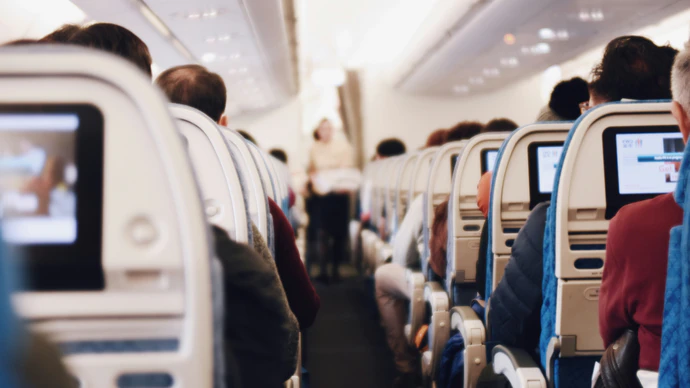
Even if turbulence is safe, it can still feel uncomfortable. Here’s how to make the experience easier:
- Always Wear Your Seatbelt: Even when the sign is off, keeping it loosely fastened prevents surprise jolts.
- Choose Seats Over the Wings: This area experiences less vertical movement compared to the back of the plane.
- Stay Calm: Remind yourself turbulence is normal and expected.
- Distract Yourself: Listen to music, watch a movie, or read to shift focus away from the bumps.
- Avoid Hot Drinks: Spills are more likely during turbulence.
The Future of Turbulence Management
Technology is making turbulence easier to predict and manage:
- Advanced Forecasting Models: Meteorologists use satellite data to map turbulence zones more accurately.
- AI and Machine Learning: Airlines are experimenting with predictive systems that warn pilots earlier.
- Improved Aircraft Design: Future planes may include features that reduce the sensation of turbulence for passengers.
Key Takeaways
- Turbulence is caused by natural air movements like jet streams, storms, and terrain.
- It feels dramatic but is almost always safe.
- Aircraft are engineered to withstand far greater forces than turbulence produces.
- Pilots are trained to manage turbulence and minimize discomfort.
- Most turbulence injuries happen because passengers don’t wear seatbelts.
Final Thoughts
Airplane turbulence may feel like the sky is shaking you around, but in reality, it’s just the atmosphere doing what it always does. Planes are built to handle it, pilots are trained to navigate it, and aviation systems are designed to keep you safe.
So the next time your flight gets bumpy, remember: turbulence is a normal part of flying, not a sign of danger. Think of it as the sky’s version of a rough road—uncomfortable at times, but perfectly safe to travel.
Explore MORE ARTICLES